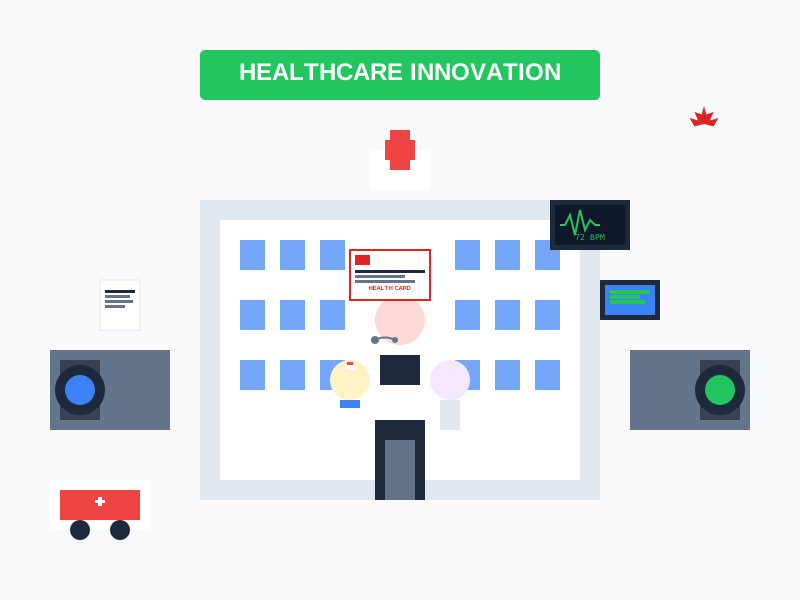
TORONTO - Canada's healthcare system is undergoing its most significant transformation in decades as provincial health authorities accelerate the adoption of cutting-edge digital technologies that promise to improve patient outcomes, reduce wait times, and enhance the efficiency of medical care delivery across the country.
The comprehensive modernization initiative, supported by $28 billion in federal funding announced in the recent budget, is being implemented simultaneously across all provinces and territories, marking the largest coordinated healthcare technology upgrade in Canadian history.
AI-Powered Diagnostic Revolution
At the forefront of this transformation is the widespread deployment of artificial intelligence diagnostic tools that are already showing remarkable results in early pilot programs. The AI systems, developed in partnership with Canadian universities and technology companies, can analyze medical imaging with accuracy rates exceeding 95%.
Dr. Sarah Kim, Chief of Radiology at Vancouver General Hospital, explained the impact: "Our AI system can detect early-stage lung cancer in chest X-rays that human radiologists might miss. We've identified 23% more cases in the first six months of deployment, potentially saving hundreds of lives."
"Our AI system can detect early-stage lung cancer in chest X-rays that human radiologists might miss. We've identified 23% more cases in the first six months of deployment, potentially saving hundreds of lives."
- Dr. Sarah Kim, Vancouver General Hospital
The AI diagnostic tools are being deployed across multiple medical specialties:
- Oncology: Early cancer detection in mammography and CT scans
- Cardiology: Heart rhythm analysis and cardiac imaging interpretation
- Dermatology: Skin lesion analysis and melanoma screening
- Ophthalmology: Diabetic retinopathy and glaucoma detection
- Pathology: Automated tissue sample analysis
Telemedicine Expansion
The COVID-19 pandemic accelerated telemedicine adoption, but the current modernization effort is taking virtual care to unprecedented levels. New platforms integrate video consultations, remote monitoring devices, and electronic health records into seamless patient care experiences.
Dr. Michael Patel, Director of Digital Health at Alberta Health Services, reported impressive results: "Our telemedicine consultations have increased 340% since 2020, but more importantly, patient satisfaction scores are consistently above 4.7 out of 5. We're providing better care while reducing travel burdens for patients."
Rural Healthcare Transformation
The impact is particularly pronounced in rural and remote communities. The Northern Ontario School of Medicine has pioneered mobile diagnostic units equipped with satellite communication systems, bringing specialist consultations to communities previously requiring hours of travel.
Mary Sinclair, a nurse practitioner in Thunder Bay, described the change: "A patient can now receive a cardiology consultation from Toronto while remaining in their home community. The specialist can view real-time ECGs, echocardiograms, and other diagnostic data as if they were in the same room."
Electronic Health Records Integration
A major component of the modernization is the implementation of integrated electronic health records (EHR) systems that allow seamless information sharing between healthcare providers across provincial boundaries.
The new system, developed by Canadian company Epic Systems in partnership with provincial health authorities, ensures patient information is securely accessible to authorized healthcare providers regardless of location.
Privacy and Security Measures
Dr. Jennifer Wong, Chief Information Security Officer for Ontario Health, emphasized the robust security measures: "We're using blockchain technology for data integrity, end-to-end encryption for all transmissions, and biometric authentication for access. Patient privacy remains our absolute priority."
The system includes:
- Multi-factor authentication for all users
- Real-time audit trails of all data access
- Automated privacy breach detection
- Patient-controlled data sharing preferences
Wait Time Reduction Strategies
Digital scheduling systems powered by machine learning algorithms are optimizing appointment booking and resource allocation across hospitals and clinics. The systems analyze historical data, seasonal patterns, and real-time capacity to minimize wait times.
Preliminary results from Quebec's health authority show significant improvements:
- Emergency department wait times reduced by 28%
- Specialist consultation scheduling improved by 35%
- Surgical booking efficiency increased by 42%
- No-show rates decreased by 19% through automated reminders
Remote Patient Monitoring
Chronic disease management has been revolutionized through wearable devices and remote monitoring systems that track vital signs, medication adherence, and symptom progression in real-time.
The program currently monitors over 125,000 patients with conditions including diabetes, heart failure, hypertension, and COPD. Dr. Robert Chen, an endocrinologist at Sunnybrook Hospital, noted the impact on diabetes care: "Continuous glucose monitoring combined with AI-powered insulin dosing recommendations has reduced dangerous blood sugar episodes by 67% among our patients."
Medication Management Innovation
Smart pill dispensers connected to healthcare systems ensure medication compliance while alerting healthcare providers to potential issues. The technology has been particularly effective in managing complex medication regimens for elderly patients.
Mental Health Digital Solutions
Mental health services have been significantly enhanced through digital platforms offering 24/7 support, AI-powered mood tracking, and virtual therapy sessions. The Canadian Mental Health Association reports that digital mental health interventions have reduced crisis interventions by 31%.
Dr. Lisa Thompson, a psychiatrist with the Centre for Addiction and Mental Health, explained: "Digital tools don't replace human connection, but they provide crucial support between appointments and can identify concerning patterns before they become crises."
Training and Adoption Challenges
The modernization effort includes comprehensive training programs for healthcare workers adapting to new technologies. Over 180,000 healthcare professionals have completed digital health training modules in the past year.
Nurse Sandra Martinez from Montreal's Jewish General Hospital shared her experience: "Initially, I was intimidated by all the new technology. But the training was excellent, and now I can't imagine working without these tools. They make me more effective and help me provide better patient care."
Addressing the Digital Divide
Efforts to ensure equitable access include providing tablets and internet connectivity to patients who lack digital devices, along with digital literacy training programs offered through community centers and libraries.
International Recognition
Canada's healthcare modernization efforts are gaining international attention. The World Health Organization recently selected Canada as a case study for digital health transformation, with delegations from 15 countries visiting to observe implementation strategies.
Dr. Tedros Adhanom, WHO Director-General, commented: "Canada's approach to healthcare digitization balances innovation with equity and privacy protection. It's becoming a model for other nations to follow."
Economic Impact
The Conference Board of Canada estimates that healthcare modernization will generate $12.7 billion in economic benefits over five years through reduced inefficiencies, improved productivity, and better health outcomes.
Key economic benefits include:
- Reduced administrative costs through automation
- Decreased hospital readmission rates
- Earlier disease detection reducing treatment costs
- Improved workforce productivity through better health outcomes
- Growth in Canadian health technology sector
Future Developments
Upcoming phases of the modernization initiative include:
Genomic Medicine Integration
Personalized medicine based on genetic profiles will be integrated into treatment protocols, with pharmacogenomic testing becoming standard for medication prescriptions.
Robotic Surgery Expansion
Robotic surgical systems will be deployed in 47 hospitals across Canada, enabling minimally invasive procedures and remote surgery capabilities for underserved areas.
Predictive Health Analytics
Population health surveillance systems will predict disease outbreaks and identify at-risk individuals before symptoms appear, enabling preventive interventions.
Patient Perspectives
Patient advocacy groups have largely embraced the modernization efforts while emphasizing the importance of maintaining human connection in healthcare delivery.
Marie Dubois, a cancer survivor from Halifax, shared her experience: "The AI helped detect my cancer recurrence three months earlier than traditional methods would have. But what mattered most was having my oncologist explain the results with compassion and support me through treatment decisions."
Regulatory Framework
Health Canada has established new regulatory frameworks for digital health technologies, ensuring safety and efficacy while enabling innovation. The accelerated approval process for AI diagnostic tools has reduced certification times from 18 months to 6 months.
Dr. Stephen Lucas, Deputy Minister of Health, noted: "We're balancing the need for thorough safety evaluation with the urgency of improving patient care. Our streamlined processes ensure Canadians benefit from innovations while maintaining the highest safety standards."
Looking Ahead
As Canada's healthcare system continues its digital transformation, the focus remains on improving patient outcomes while preserving the universal, publicly funded principles that define Canadian healthcare.
The success of early implementations provides optimism that technology can address longstanding challenges in healthcare delivery while preparing the system for future health challenges. With continued investment and careful implementation, Canada's healthcare modernization may serve as a global model for 21st-century medicine.
Health Minister Jean-Yves Duclos concluded: "This modernization represents more than technological advancement – it's about ensuring every Canadian receives the best possible care, regardless of where they live or their economic circumstances. Technology is our tool, but compassionate care remains our mission."